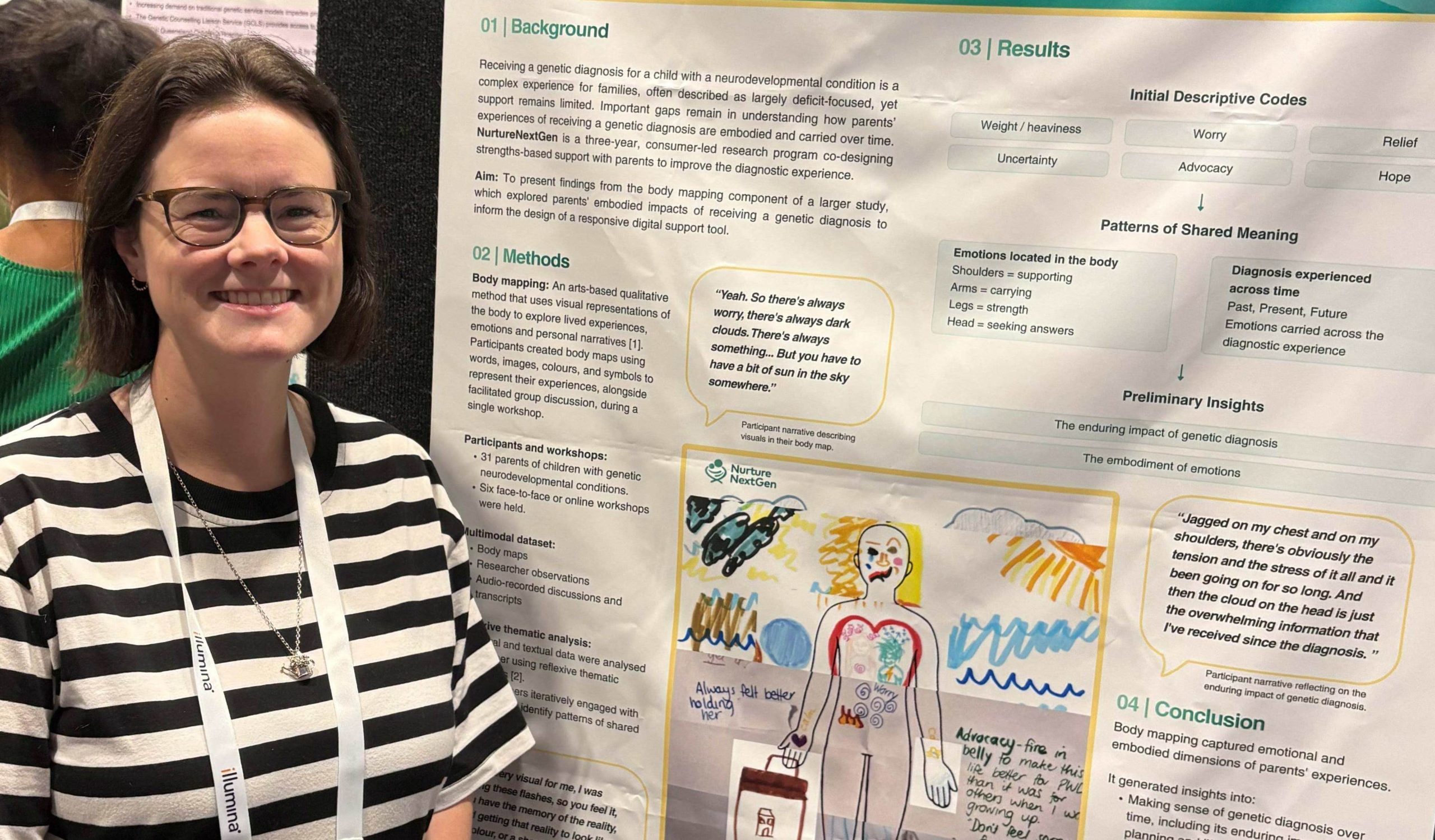
NurtureNextGen research was recently represented at the 49th Human Genetics Society of Australasia (HGSA) Annual Scientific Meeting in Christchurch, Aotearoa New Zealand. The conference brought together researchers, health professionals and scientists working in the field of human genetics.
Exploring experiences through Body Mapping
NurtureNextGen co-lead Associate Professor Erin Turbitt presented emerging findings from the Body Mapping study, led by Amy Griffiths, at the conference.
Receiving a genetic diagnosis for a child with a neurodevelopmental condition can be a complex experience for families. While previous research has improved our understanding of parents’ experiences following a genetic diagnosis, important gaps remain in understanding how these experiences are embodied and carried with parents over time.
The Body Mapping study seeks to explore this dimension of the diagnostic experience. Embedded within NurtureNextGen’s broader workshop data collection, Body Mapping uses a creative and participatory approach to explore parents’ experiences of receiving a genetic diagnosis for their child.
Through the Body Mapping activity, participants visually represent and reflect on aspects of their diagnostic experience that may be difficult to capture through words alone. While the activity forms part of the broader NurtureNextGen workshops, the data generated through Body Mapping are also being examined as a distinct body of research, offering an opportunity to explore how parents experience and carry the impacts of diagnosis over time.
Exploring digital support for parents
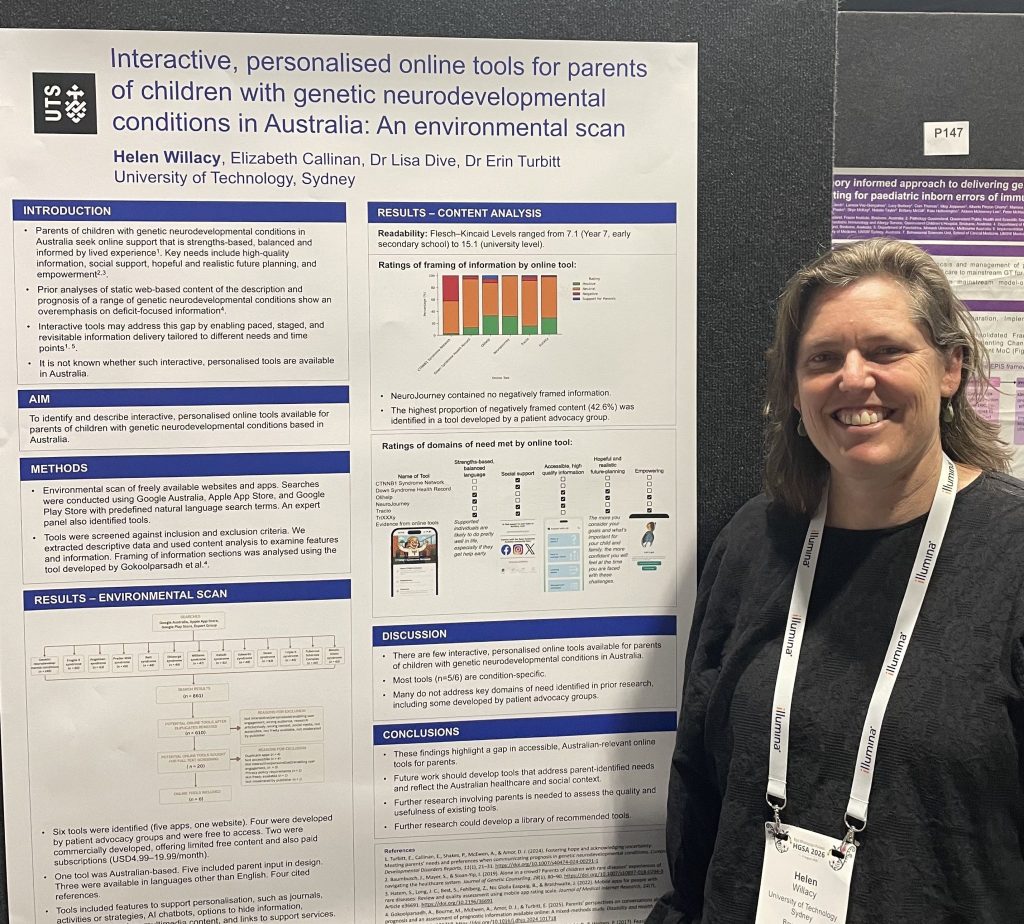
Master of Genetic Counselling student Helen Willacy also presented research contributing to the broader NurtureNextGen project.
Helen’s research involved an environmental scan of interactive and personalised online tools available to Australian parents of children with genetic neurodevelopmental conditions. The scan identified relatively few Australian-relevant tools, with most focused on specific conditions rather than broader support needs.
Importantly, the findings identified gaps in available support and highlighted a lack of Australian-relevant resources that address many of the needs previously identified by parents. These findings reinforce the need for new approaches to supporting families and provide important justification for the development of the NurtureNextGen digital tool.
Together, these projects highlight how NurtureNextGen is combining multiple forms of research to inform the development of a digital tool for parents of children with genetic neurodevelopmental conditions. While the Body Mapping study provides deeper insights into parents’ experiences following their child’s diagnosis, Helen’s research demonstrates that there are currently few online resources available that comprehensively address parents’ needs within the Australian context. Collectively, the findings help ensure that the NurtureNextGen tool is grounded in both parents’ lived experiences and evidence about current gaps in available support.
No responses yet